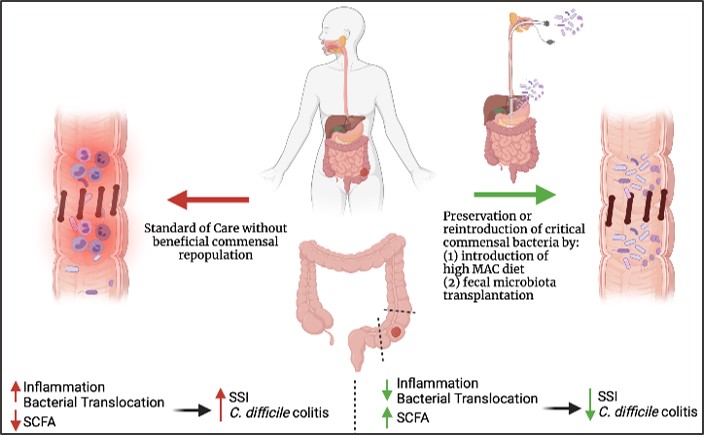
Resectional colon and rectal surgeries are the mainstay treatment for colorecal cancer and diverticular diseases and require the reformation of a healthy bowel connection (anastomosis). Despite optimal surgical technique, post-operative complications including anastomotic leak as well as surgical site infections (SSI) and Clostridioides difficile infection may occur. The intestinal microbiota is a key feature that can mediate wound healing and may contribute to post-surgical outcomes.
Current Experiments
- Microbiota Tranplantation Therapy to Correct Perioperative Surgical Dybiosis
We recently completed a Phase I clinical trial (NCT06370884) assessing the efficacy of microbiota transplant therapy (MTT; formerly referred to as fecal microbiota transplantation) to repopulate the gut following surgery and improve wound healing. - Oral Translocation of Opportunistic Pathogens in the Perioperative Surgical Period
Increasing evidence suggests that surgically associated pathogens (primarily Streptococcus) may take advantage of the reduced biomass of commensal gut bacteria following surgery to translocate to the gut and cause infection. We are evaluating these dynamics in patient populations and developing ways to mitigate the pathogenic effects.